
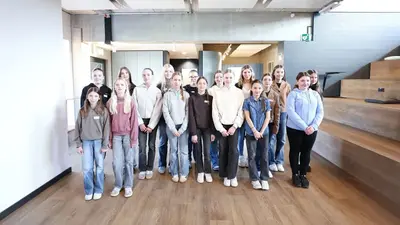
The future of engineering isn’t just about better technology—it’s about better representation.
That’s why NETZSCH, the global specialist in pumps, mixing systems, and analytical instruments, threw open its doors for Girls’ Day 2026—an annual initiative across Germany designed to introduce schoolgirls to careers in science, technology, engineering, and mathematics (STEM).
Held on April 24, 2026, at NETZSCH’s headquarters in Selb, Bavaria, the event wasn’t a tour. It was an invitation: to explore, to experiment, and to imagine themselves as the engineers, innovators, and leaders of tomorrow.
🎯 Why Girls’ Day Matters
Despite progress, women remain significantly underrepresented in technical fields:
| Statistic | Context |
|---|---|
| ~20% of engineering graduates in Germany are women | Progress is real—but pace is slow |
| <15% of leadership roles in industrial tech are held by women | Representation gaps persist at senior levels |
| Early exposure matters: Girls who experience hands-on STEM before age 14 are 3x more likely to pursue technical careers | Intervention timing is critical |
Girls’ Day addresses this gap by replacing abstract “career advice” with real-world experience: letting young women see, touch, and try the work that powers industry.
🔧 What Happened at NETZSCH Selb?
The day was designed for discovery—not demonstration. Participants (ages 10–16) engaged in:
✅ Hands-on workshops – Assemble a small pump component, test material properties, or explore 3D printing workflows
✅ Lab tours – See analytical instruments in action and learn how data drives engineering decisions
✅ “A Day in the Life” sessions – Meet female engineers, technicians, and apprentices sharing authentic career journeys
✅ Q&A without filters – Ask anything: salary, work-life balance, challenges, rewards
✅ Take-home projects – Simple experiments to continue learning beyond the visit
“Our goal isn’t just to show girls what we do—it’s to help them see themselves doing it. When a student leaves saying, ‘I could do that,’ we’ve planted a seed that could grow into a career.”
— NETZSCH Talent Development Team
🌱 Beyond One Day: Building Pipelines, Not Just Events
NETZSCH treats Girls’ Day as a catalyst—not a checkbox. The company supports sustained engagement through:
🔹 Apprenticeship pathways – Clear routes from school visits to formal training programs
🔹 School partnerships – Ongoing collaborations with local educators to integrate industry exposure into curricula
🔹 Mentorship opportunities – Connecting interested students with NETZSCH employees for guidance and networking
🔹 Inclusive culture work – Ensuring that when diverse talent joins, they thrive
This “event-to-ecosystem” approach recognizes that attracting talent is only the first step—retaining and empowering it is the real challenge.
💡 Why This Benefits Everyone
| For Girls | For NETZSCH | For Industry |
|---|---|---|
| Confidence in technical abilities | Access to a broader, more diverse talent pool | Stronger innovation through diverse perspectives |
| Clarity on career pathways | Enhanced employer brand among next-gen talent | More resilient workforce for future skills gaps |
| Role models who look like them | Fresh ideas and approaches from new voices | Progress toward equitable, inclusive workplaces |
Diversity isn’t a “nice-to-have.” It’s a performance multiplier.
🌍 The Bigger Picture: STEM Equity as Industrial Strategy
As industries confront digital transformation, decarbonization, and skills shortages, the talent question is existential. Companies that proactively invest in inclusive pipelines—like NETZSCH through Girls’ Day—aren’t just “doing good.” They’re:
✨ Future-proofing their workforce against demographic shifts
✨ Unlocking innovation through cognitive diversity
✨ Strengthening community ties that support long-term operational license
✨ Aligning with ESG expectations from investors, customers, and employees
In short: equity and excellence aren’t competing priorities—they’re mutually reinforcing.