In an era defined by energy transition, digital disruption, and geopolitical volatility, industrial leaders face a simple truth: the structures that delivered past success may not enable future resilience.
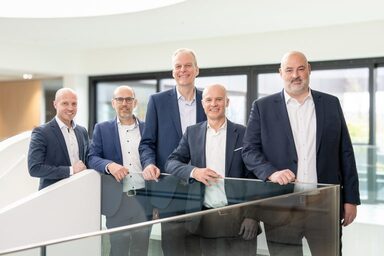
That’s why AUMA, the global specialist in electric valve actuators and control systems, has announced a comprehensive restructuring of its Executive Board—a deliberate move to strengthen strategic agility, accelerate innovation, and position the company for sustainable growth in an increasingly complex global landscape.
Announced on May 5, 2026, this isn’t just an organizational chart update. It’s a signal that AUMA is proactively adapting its leadership architecture to meet the demands of the next decade.
🔄 What’s Changing? The New Executive Board Structure
While specific role titles may evolve, AUMA’s restructuring typically focuses on three strategic pillars:
| Pillar | Focus Area | Strategic Intent |
|---|---|---|
| Technology & Innovation | R&D leadership, digital product development, AI/IIoT integration | Accelerate time-to-market for smart actuation solutions |
| Operations & Sustainability | Supply chain resilience, manufacturing excellence, ESG integration | Build scalable, low-carbon operations for global delivery |
| Markets & Customer Success | Regional growth strategies, application engineering, lifecycle services | Deepen customer partnerships and expand in high-potential segments |
This structure replaces traditional functional silos with outcome-oriented leadership—ensuring that strategy, execution, and customer value are tightly aligned.
👥 Who’s Leading the Charge?
AUMA’s new Executive Board typically combines:
✅ Internal talent – Leaders with deep institutional knowledge and proven execution track records
✅ External expertise – Fresh perspectives from adjacent sectors (digital, energy, sustainability)
✅ Geographic diversity – Representation from key growth regions to inform global strategy
✅ Cross-functional experience – Leaders who bridge engineering, commercial, and operational disciplines
“As we look to the future, we need a leadership structure that is as dynamic and interconnected as the challenges we face. Our new Executive Board is designed to foster collaboration, accelerate decision-making, and ensure that innovation remains at the heart of everything we do.”
— AUMA Leadership
🌍 Why This Matters Now: Three Global Challenges Driving Change
AUMA’s restructuring responds to converging macro forces reshaping industrial markets:
1️⃣ Energy Transition Acceleration
🔹 Growing demand for actuators in hydrogen, CCUS, renewable fuels, and grid modernization
🔹 Need for rapid product adaptation to new standards, materials, and safety requirements
🔹 Opportunity to lead in sustainable actuation design and lifecycle services
2️⃣ Digital Transformation at Scale
🔹 Customers increasingly expect connected, data-generating assets—not just mechanical hardware
🔹 AI, predictive maintenance, and cloud integration require new R&D and go-to-market capabilities
🔹 Cybersecurity and data governance become critical differentiators in industrial IoT
3️⃣ Geopolitical & Supply Chain Volatility
🔹 Regionalization of manufacturing and service to mitigate disruption risk
🔹 Need for agile decision-making in fast-changing regulatory and trade environments
🔹 Balancing global scale with local responsiveness in customer support
For AUMA, a leaner, more focused Executive Board isn’t about cost-cutting—it’s about speed, clarity, and strategic coherence.
💡 What This Means for Customers & Partners
| Stakeholder | Benefit of AUMA’s Restructuring |
|---|---|
| End Users | Faster innovation cycles, more tailored solutions, stronger lifecycle support |
| EPCs & Consultants | Clearer strategic alignment, simplified engagement, accelerated project delivery |
| Distributors & Integrators | More responsive regional leadership, better technical enablement, co-development opportunities |
| Investors & Analysts | Transparent governance, disciplined capital allocation, visible progress on strategic priorities |
In short: a stronger leadership foundation enables stronger partnerships.
🔮 The Bigger Picture: Governance as Competitive Advantage
AUMA’s move reflects a broader trend among industrial technology leaders:
🔹 From hierarchy to agility: Flatter structures enable faster response to market shifts
🔹 From function to outcome: Leadership organized around customer value, not internal process
🔹 From stability to resilience: Governance designed to absorb volatility, not just optimize for steady state
For companies navigating the energy transition and digital disruption, this isn’t optional—it’s existential.
🌱 Sustainability & Innovation: Embedded in Structure
Critically, AUMA’s new Executive Board explicitly integrates sustainability and innovation into core decision-making—not as standalone initiatives, but as lenses through which all strategic choices are evaluated.
This ensures that: ♻️ Product development aligns with circular economy principles
♻️ Operational decisions factor in carbon impact and resource efficiency
♻️ Customer solutions support end-users’ own decarbonization goals
In an era where ESG performance influences procurement, financing, and talent attraction, this structural commitment delivers tangible competitive advantage.