
For low-lying island nations, water security isn’t a future concern—it’s an existential priority. Rising sea levels, saltwater intrusion, and limited freshwater reserves create a perfect storm of vulnerability. But what if the ocean itself could become the solution—without the energy penalty and coastal footprint of traditional desalination?
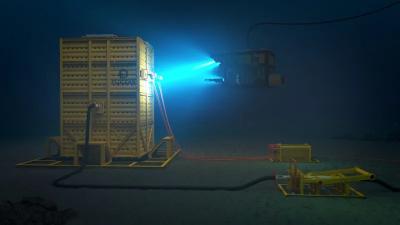
That’s the vision behind a groundbreaking collaboration: Flocean, the UK-based innovator in subsea fluid systems, has partnered with WaterConnect, a Maldives-focused water infrastructure developer, to advance a subsea desalination project designed to deliver clean, reliable water to island communities—using the deep ocean’s natural pressure to slash energy demand and environmental impact.
Announced on May 6, 2026, this isn’t just a pilot project. It’s a potential blueprint for sustainable water resilience across Small Island Developing States (SIDS) worldwide.
🎯 Why Subsea Desalination? The Island Water Challenge
Island nations face unique constraints that make conventional desalination problematic:
| Challenge | Traditional Desalination Limitation | Subsea Approach Advantage |
|---|---|---|
| High energy costs | Reverse osmosis requires significant pumping pressure (60–80 bar) | Deep-ocean hydrostatic pressure provides ~1 bar per 10m depth—reducing energy demand by up to 40% |
| Limited land availability | Large surface plants compete with housing, tourism, and ecology | Subsea modules occupy minimal seabed footprint; no coastal real estate required |
| Brine disposal impacts | Surface discharge can harm sensitive marine ecosystems | Deep-ocean brine dispersion leverages natural dilution, reducing local ecological stress |
| Climate vulnerability | Coastal infrastructure exposed to storms, erosion, and sea-level rise | Subsea systems are inherently protected from surface weather extremes |
| Import dependency | Many islands rely on bottled or shipped water | Local, scalable production enhances sovereignty and reduces logistics risk |
For the Maldives—where 80% of land sits less than 1 meter above sea level—these advantages aren’t incremental. They’re transformative.
🔧 How Subsea Desalination Works: Engineering Meets Ocean Physics
Flocean’s technology leverages a simple but powerful principle: Use the ocean’s depth to do the hard work.
| Stage | Process | Innovation |
|---|---|---|
| 1. Intake | Seawater drawn at depth (e.g., 600–1,000m) | Natural pressure reduces or eliminates need for high-energy feed pumps |
| 2. Pre-treatment | Filtration and conditioning at seabed or via riser | Compact, modular design minimizes surface infrastructure |
| 3. Desalination | Reverse osmosis membranes powered by hybrid energy (solar + grid + potential wave/tidal) | Energy recovery devices capture pressure from brine stream for reuse |
| 4. Delivery | Freshwater pumped to shore via dedicated riser or integrated with existing infrastructure | Flexible routing adapts to island topography and demand patterns |
| 5. Brine management | Concentrated discharge at depth with diffuser systems | Enhanced dilution reduces salinity plume impact vs. surface discharge |
“Subsea desalination isn’t about replacing land-based plants everywhere—it’s about solving the specific challenges islands face: energy, space, and resilience. By working with WaterConnect in the Maldives, we’re proving that deep-ocean engineering can deliver practical, sustainable water security where it’s needed most.”
— Flocean Leadership
🤝 Partnership Roles: Combining Expertise for Impact
| Partner | Contribution | Strategic Value |
|---|---|---|
| Flocean | Subsea system design, pressure management, modular deployment expertise | Proven offshore engineering capability adapted for water infrastructure |
| WaterConnect | Local regulatory navigation, community engagement, Maldives-specific hydrology knowledge | Ensures solutions are technically sound AND socially/culturally appropriate |
| Maldivian Authorities | Permitting support, infrastructure integration, long-term operational planning | Aligns project with national water security and climate adaptation strategies |
This tripartite model—technology provider + local developer + government partner—is increasingly essential for complex, place-based infrastructure solutions.
💡 Why This Project Matters Beyond the Maldives
| Stakeholder | Relevance |
|---|---|
| Other SIDS (Caribbean, Pacific, Indian Ocean) | Replicable model for islands facing similar water-energy-land constraints |
| Coastal Communities (mainland nations) | Potential application for remote or disaster-prone coastal zones |
| Climate Adaptation Funders | Demonstrates innovative, scalable infrastructure for climate resilience financing |
| Water Technology Investors | Validates commercial viability of subsea desalination as a growth sector |
| Marine Environmental Groups | Opportunity to co-develop best practices for low-impact ocean infrastructure |
In short: What starts in the Maldives could scale to hundreds of vulnerable communities worldwide.
🌱 Sustainability by Design: Beyond “Less Bad” to Regenerative
This project embeds environmental responsibility into core engineering:
♻️ Energy efficiency – Leveraging hydrostatic pressure cuts electricity demand vs. conventional RO
♻️ Ecosystem protection – Deep brine dispersion + careful siting minimizes impact on shallow reefs and fisheries
♻️ Material circularity – Modular design enables component refurbishment vs. full-system replacement
♻️ Renewable integration – Hybrid power architecture supports future transition to 100% solar/wave/tidal
Critically, the project includes baseline environmental monitoring to quantify impacts and inform best practices for future deployments.
📋 Implementation Roadmap: From Concept to Community Impact
A responsible subsea desalination project follows a structured, low-risk pathway:
1️⃣ Feasibility & Site Assessment – Bathymetry, hydrology, ecological sensitivity, and community needs analysis
2️⃣ Technology Validation – Component testing, energy modeling, and brine dispersion simulation
3️⃣ Regulatory & Social License – Engagement with fisheries, tourism, and local communities; permitting alignment
4️⃣ Pilot Deployment – Small-scale module to validate performance, monitoring protocols, and maintenance workflows
5️⃣ Scale-Up Planning – Modular expansion based on demand growth and lessons learned
6️⃣ Knowledge Sharing – Open documentation to accelerate adoption across similar island contexts
“Water security is foundational to everything else—health, economy, culture. By co-developing this project with Flocean and Maldivian partners, we’re not just building infrastructure; we’re building confidence that innovative engineering can serve people and planet together.”
— WaterConnect Leadership