
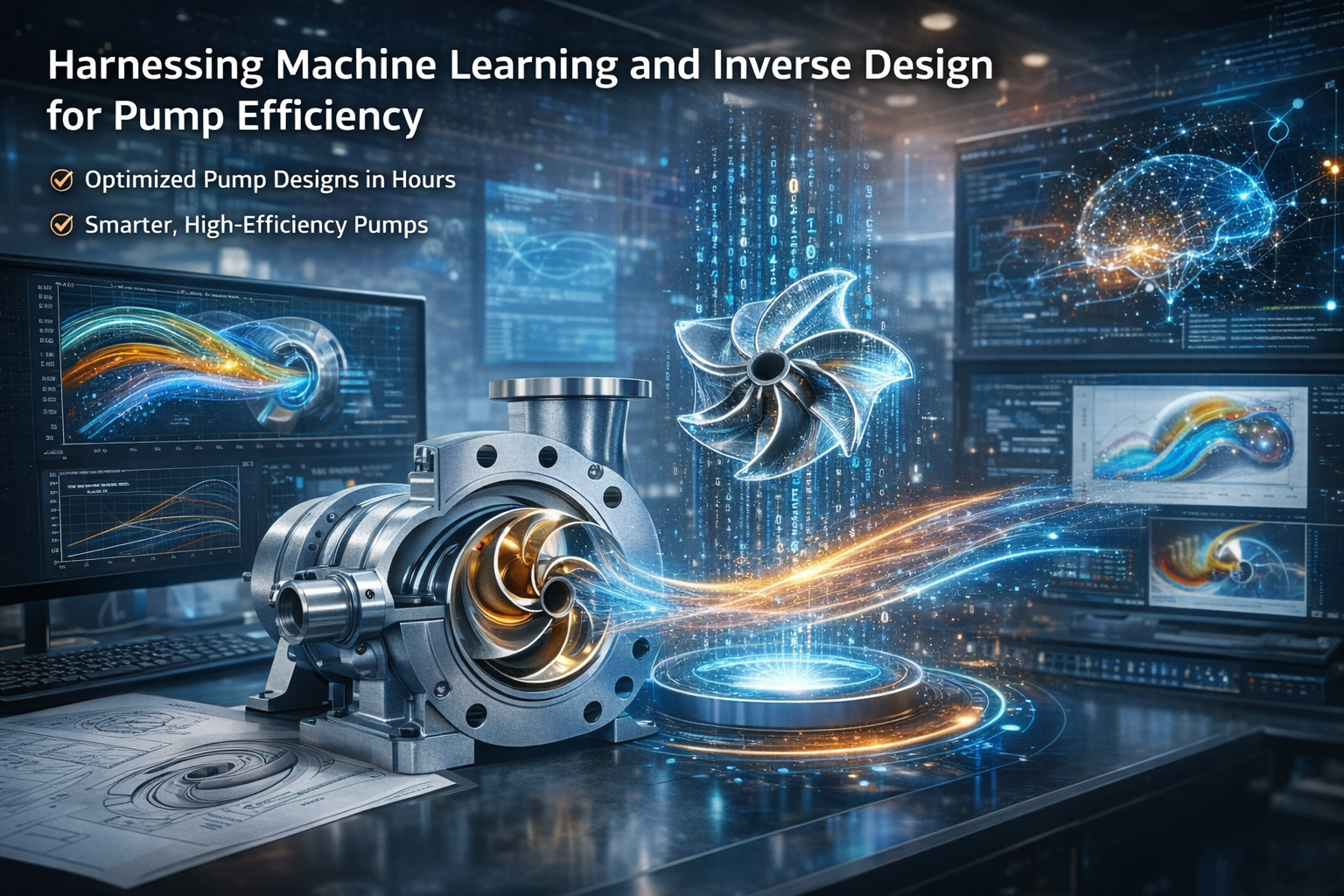
Engineering software specialist Advanced Design Technology (ADT) is applying machine learning (ML) and inverse design techniques to significantly improve the efficiency and performance of centrifugal pumps. These technologies are transforming the traditional pump design process by enabling engineers to rapidly explore design alternatives and identify optimal configurations with far greater accuracy and speed.
Accelerating Pump Design with Machine Learning
Traditional pump design often requires extensive simulations and multiple iterations, which can take considerable time and computational resources. By integrating machine learning algorithms with advanced design tools, engineers can automate much of the optimization process. The ML models analyze design parameters and performance results, allowing the system to identify the most efficient configurations much faster than conventional approaches.
Using these techniques, optimized pump designs can be generated in just a few hours, compared with the longer timelines typically associated with traditional engineering workflows.
The Role of Inverse Design
A key component of this approach is 3D inverse design technology, which reverses the conventional design process. Instead of defining the geometry first and then evaluating its performance, engineers specify the desired hydraulic performance, and the software automatically generates the optimal blade shape required to achieve that performance.
This method reduces the number of design variables needed to describe complex blade geometries and ensures that designs meet the target operating conditions from the outset.
Optimizing Performance Across Multiple Conditions
Modern pumps must operate efficiently across a wide range of flow rates and speeds, especially with the increasing use of variable-speed drives. Machine learning optimization tools can analyze multiple operating points simultaneously, enabling engineers to design pump impellers that maintain high efficiency under varying conditions.
Even small improvements in pump efficiency can deliver substantial benefits over time, including reduced energy consumption, lower operating costs, and improved environmental performance.
Transforming the Future of Pump Engineering
By combining machine learning, computational fluid dynamics (CFD), and inverse design, ADT’s approach represents a major shift in turbomachinery engineering. These advanced tools allow designers to explore larger design spaces, reduce development time, and create pumps that meet increasingly demanding efficiency and sustainability goals.
As industries worldwide seek to improve energy efficiency and reduce environmental impact, such intelligent design methods are expected to play a vital role in shaping the next generation of high-performance pumping systems.