
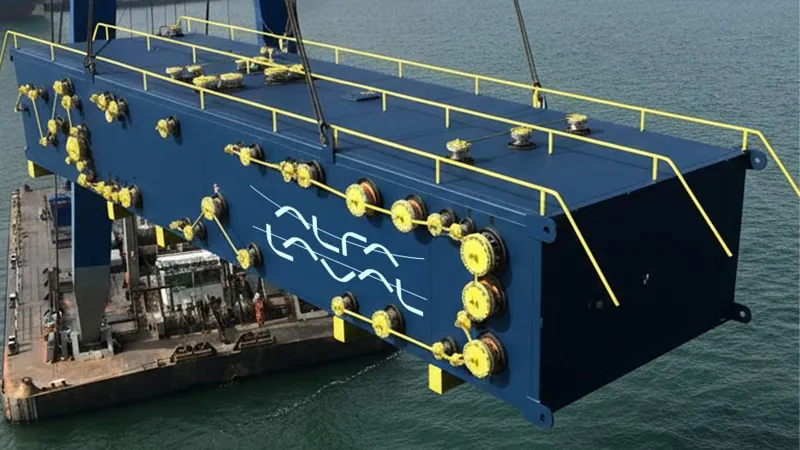
Swedish engineering company Alfa Laval has partnered with the Institute for Advanced Engineering to deliver advanced cryogenic technology for South Korea’s first large-scale Liquid Air Energy Storage (LAES) facility. The project marks an important step toward strengthening grid stability and accelerating the country’s transition to renewable energy.
The facility will use Alfa Laval’s brazed aluminium plate heat exchangers and a ten-stage vertical high-pressure cryogenic pump designed to operate reliably under extremely low temperatures and demanding conditions. These components will help produce up to 10 tonnes of liquid air per day, enabling efficient energy storage and release when electricity demand peaks.
What Is Liquid Air Energy Storage (LAES)?
Liquid Air Energy Storage works by cooling air to cryogenic temperatures, turning it into a liquid that can be stored in insulated tanks. When electricity is required, the liquid air is warmed and expanded to drive turbines that generate power. This technology provides long-duration energy storage, helping balance intermittent renewable sources such as wind and solar while improving grid reliability.
Supporting the Energy Transition
As countries worldwide expand renewable energy capacity, large-scale storage solutions like LAES are becoming essential. By enabling energy generated during periods of surplus to be stored and used later, these systems help reduce renewable curtailment and enhance overall energy resilience.
The collaboration between Alfa Laval and the Institute for Advanced Engineering demonstrates how advanced engineering and innovative energy technologies can play a vital role in supporting South Korea’s clean-energy ambitions and broader decarbonisation goals.
Key Takeaways
- Alfa Laval will supply cryogenic technology for South Korea’s first large-scale LAES project.
- The system will produce up to 10 tonnes of liquid air per day for energy storage.
- LAES technology helps store renewable energy and stabilise power grids.
- The project supports South Korea’s transition to low-carbon energy systems.