
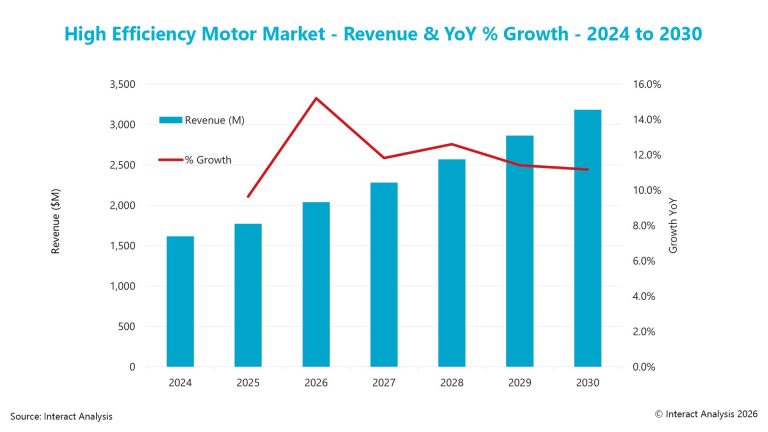
The global high-efficiency motors market is on track for substantial growth, with projected revenues expected to exceed USD 3 billion by 2030. Driven by rising industrial automation, stricter energy efficiency regulations, and increasing demand for cost-effective and environmentally friendly solutions, these motors are becoming a key component in modern manufacturing and infrastructure systems.
High-efficiency motors are designed to reduce power loss, improve performance, and extend equipment life while lowering operating costs — making them vital in sectors such as manufacturing, HVAC systems, pumps and compressors, automotive, and renewable energy installations.
📈 Key Growth Drivers
- Energy Efficiency Regulations: Governments worldwide are setting tougher emissions and energy consumption standards, encouraging the adoption of high-efficiency motors to meet regulatory requirements and reduce carbon footprints.
- Industrial Digitisation: The integration of smart sensors and automation in industries is increasing the demand for motors that can deliver precise control and optimized performance, further boosting market uptake.
- Cost Savings Over Time: While high-efficiency motors may have higher upfront costs, their lower energy consumption and maintenance requirements translate to significant lifetime savings for businesses.
- Sustainability Initiatives: With global focus shifting toward net-zero targets and sustainable operations, energy-efficient motor systems are becoming core investments in corporate decarbonisation strategies.
🌍 Market Trends and Opportunities
- Growing Adoption in Emerging Economies: Rapid urbanisation and industrial expansion in Asia-Pacific and Latin America are expected to spur demand.
- Electrification of Equipment: Increased use of electric drives in pumps, fans, and other rotary equipment is broadening application potential.
- IoT and Predictive Maintenance: Integration with digital monitoring allows real-time performance tracking, predictive diagnostics, and asset health management — further enhancing the value proposition.
Key Takeaways :
Trends: Digital integration, predictive maintenance, emerging markets growth.
Market Size: Projected to exceed USD 3 billion by 2030.
Drivers: Energy regulations, industrial automation, sustainability goals.
Applications: Manufacturing, HVAC, pumps & compressors, automotive, renewables.