
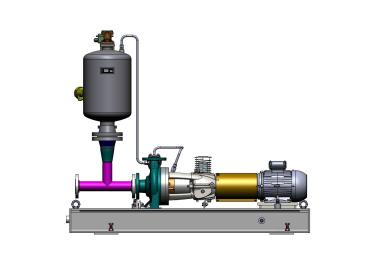
In a testament to its engineering agility, Amarinth is developing four bespoke drain disposal pumps for the NLNG crude delivery pipeline at the Gbetiokun Field in Nigeria’s Niger Delta. This project further expands Amarinth’s footprint in the African energy sector while solving a critical technical challenge that had stalled progress.
The Challenge: Exceptionally Low NPSH
The Gbetiokun Field, located within the OML 40 license area, is a vital oil and gas asset. As part of an infrastructure expansion to scale up its contribution to the national delivery network, four drain disposal pumps were required for an onshore facility along the pipeline.
However, the project hit a major roadblock: the pumps had to empty a tank located beneath them. This configuration created an exceptionally low Net Positive Suction Head (NPSH) , which, if not addressed, would cause pump cavitation and risk severe equipment damage. Several pump manufacturers were initially consulted, but none could deliver a viable solution for these extreme operating conditions. Recognizing the need for specialist skills, the project engineers ultimately turned to Amarinth.
The Solution: A Bespoke, Integrated System
Leveraging its extensive expertise in designing pumps for very low NPSH environments, Amarinth worked closely with the pipeline engineers to develop a bespoke solution. The resulting system eliminates the need for a priming chamber by integrating an API 610 pump with a specialized, upstream vacuum unit to generate the necessary suction, ensuring reliable operation without a traditional suction head.
The innovative system includes three key components:
- Venturi Effect Ejector: The primary unit uses an ejector to create a vacuum in the pipework, lifting the process fluid to the pump. By exploiting the venturi effect, the design has very few moving parts, minimizing failure points and ensuring the system is ATEX compliant for hazardous areas.
- Automated Fluid Management: Managed by an automated control system, the unit expels air from the pipework to lift fluid to the pump level. Once the centrifugal pump is fully primed, it is automatically switched on, and the primary unit is switched off.
- Modular and Flexible Design: The self-priming units are fully modular. The material of the priming unit matches the pipework and pump, and key components are selected to suit the customer-specific Approved Vendor List (AVL) .
Leadership Perspective
Oliver Brigginshaw, Managing Director of Amarinth, commented: “We are delighted to have partnered on this challenging project for the NLNG pipeline. Our ability to engineer bespoke solutions where others cannot is a testament to our technical agility and deep understanding of fluid dynamics. This project further underlines our commitment to supporting the Nigerian oil and gas industry with reliable, high-performance pumping technology.”
Strengthening Nigeria’s Energy Infrastructure
This project builds on Amarinth’s growing presence in Nigeria, following a previous £1.5 million order for chemical injection skid packages for the country’s Soku and Gbaran LNG fields. By delivering a commercially viable solution to a predicament that had stalled the project, Amarinth is playing a crucial role in enabling the Gbetiokun Field to scale up its contribution to Nigeria’s national energy delivery network.
The bespoke low NPSH pumping solution demonstrates how engineering innovation can overcome seemingly insurmountable technical hurdles, ensuring the reliability and efficiency of critical energy infrastructure.