
Structural columns are critical load-bearing elements in industrial and commercial facilities. While designers and engineers invest heavily in strength and stability, the base of a steel column is often vulnerable to corrosion, moisture ingress, and concrete deterioration — conditions that, if left unchecked, can weaken support and ultimately lead to structural failure.
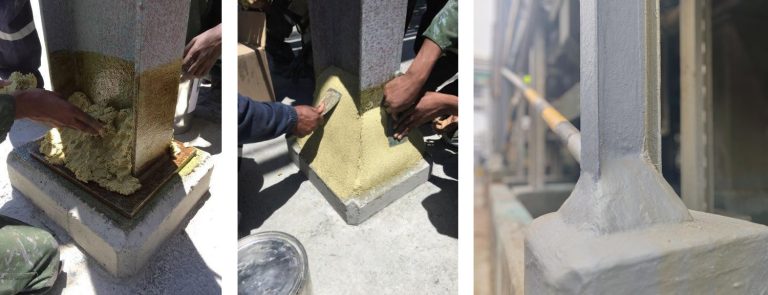
Protecting steel and concrete column bases from corrosion is crucial for maintaining the structural integrity and longevity of buildings and infrastructures. (Image source: Denso, Inc.)
To address this risk, corrosion protection specialists emphasise the importance of robust base-plate coatings, and one solution gaining traction is Denso Covercoat. This high-performance protective coating is designed to safeguard column bases and surrounding concrete against aggressive environments, moisture attack, and chemical exposure.
Why Column Base Protection Matters
Steel column bases are especially susceptible to corrosive attack due to:
- Proximity to ground moisture and salts
- Splash and spray from rain, irrigation, or cleaning fluids
- Concrete carbonation and chloride penetration
- Mechanical abrasion from foot traffic and equipment movement
Over time, these stressors can degrade even heavy-gauge steel and compromise concrete integrity — leading to costly repairs or, in worst-case scenarios, partial collapse.
How Denso Covercoat Works
Denso Covercoat is a bitumen-based protective membrane applied to the steel base plate and adjacent concrete surface. Its benefits include:
- Moisture and chemical resistance, forming a durable barrier against corrosion
- Elasticity and adhesion that accommodate small movements without cracking
- Easy application in confined or challenging environments
- A long service life when correctly applied and detailed
By sealing vulnerable interfaces and creating a continuous protective layer, the coating helps preserve structural integrity and extends the operational lifespan of critical support elements.
Best Practices for Installation and Maintenance
- Surface preparation: Clean surfaces thoroughly to ensure adhesion.
- Detailing at edges and penetrations: Avoid gaps where moisture can enter.
- Regular inspection: Monitor coating condition over time and re-coat as needed.
- Environmental considerations: Choose compatible primers and tapes when necessary.
Source: Denso, Inc.